The agreed files, versions and responsibilities. Usage rights and any ongoing support are set before work begins.
The finish is a series of creative decisions.
Editing is more than joining clips. The structure, sound, colour and image treatment decide what the audience notices and feels.
The sequence is the unit of review
Watch the cut with sound, then check continuity, titles, colour and the relationship between shots.
Sound has its own craft
Texture, room tone and deliberate silence can support the image without overwhelming the story.
Editorial & story
Organise footage, identify the story and build an assembly with a clear progression. Refine pacing, performance and information before polishing individual frames.
Colour & image finishing
Balance shots, establish contrast and palette, protect skin and product colour, and review consistency across the sequence. A film look should serve the subject rather than apply the same warm preset everywhere.
Sound & music
Clean dialogue where possible, build atmosphere, choose appropriately licensed music and shape the mix. Plan captions and accessibility requirements early.
Compositing & motion design
Combine approved plates, remove agreed distractions, track graphic elements or build purposeful titles. Scope shot complexity and source-material requirements before finishing.
A review should reveal the decision.
Compare story structure, image balance and the final viewing context. Clear version names and timecoded notes keep feedback usable.
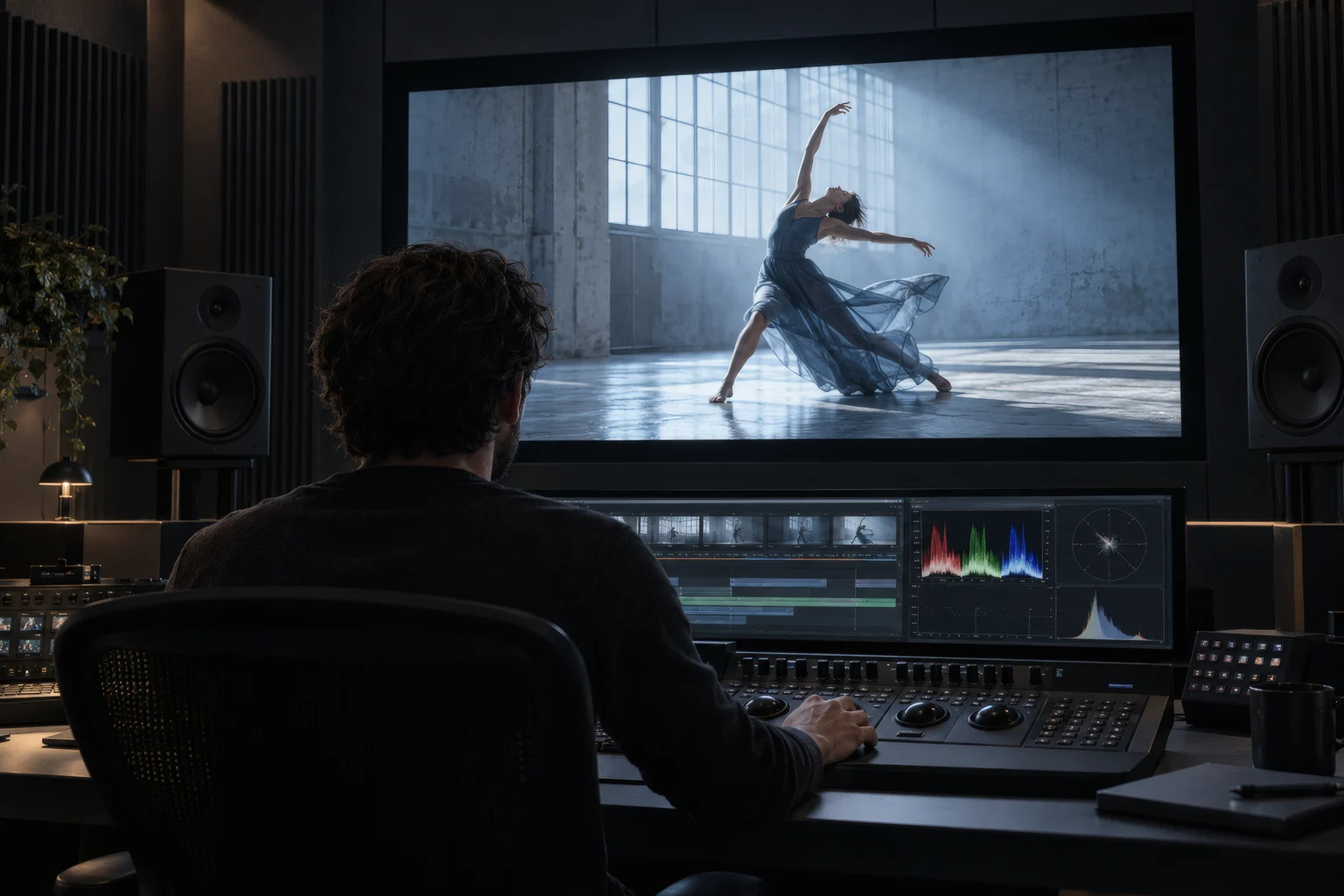
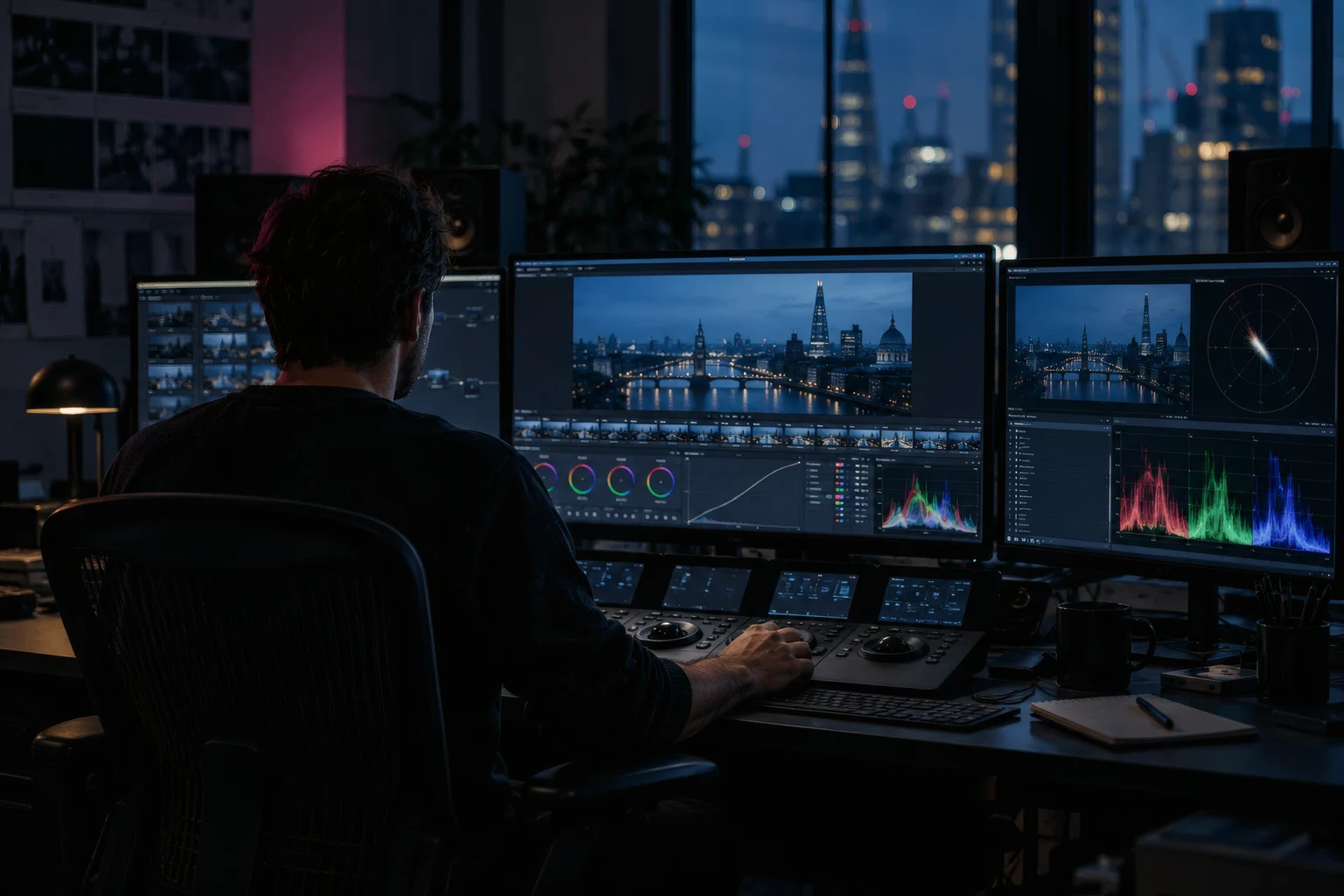
Original finishing-workflow illustration, not a screenshot of a real client project.
Picture review
Resolve sequence, shot choice and timing before labour-intensive final polish.
Finish review
Review colour, cleanup, graphics, sound and captions against the approved reference.
Delivery check
Check resolution, aspect ratio, frame rate, codec, audio, safe areas and playback on intended screens.
Masters and versions that are easy to use.
The handover should make it clear which file belongs where.
Review before release
Check the export itself: framing, captions, audio, end frame and the version name—not only the editing timeline.
Delivery requirements are confirmed for each project
Output
Agree before delivery
Campaign master
Duration, resolution, frame rate, aspect ratio, picture and sound specification.
Social versions
Placement crops, captions, openings, safe areas and whether a cut is a re-edit or simple resize.
Language & accessibility
Subtitle files, burned-in captions, translations and descriptive requirements where included.
Archive & project files
Source ownership, project dependencies, music and stock licences, retention period and transfer method.
Can you edit footage someone else filmed?
Yes, after reviewing media condition, codec, resolution, sound, rights and the intended output. Missing coverage or damaged audio can limit the result.
How do revisions work?
We agree review stages and included rounds. Consolidated, timecoded feedback is more useful than conflicting notes from multiple versions.
Make it count
What are you working on?
Bring the idea, the ambition or the problem. We’ll help shape the next step.