Three connected disciplines. One recognisable business.
Identity defines the language. Social publishing keeps it useful. Search helps people find the relevant answer. Each needs its own craft.
Brand identity
Positioning, visual identity, tone of voice and practical applications. The system needs to work on menus, presentations, packaging, websites and everyday communications.
Social & editorial content
Plan informative, expressive and timely content around the audience. Develop formats and an achievable approval rhythm instead of a feed of interchangeable posts.
SEO & useful discovery
Connect real customer questions to clear pages, relevant internal links and a sound technical foundation. Search work needs substance behind the title.
Identity in practice
A brand system. Ready for real life.
See how strategy becomes something a team can use consistently.
Original AI-created process illustration; not a photograph of a completed client commission.
Recognition is built through use.
A logo is only one element. We connect the name, voice, type, colour, imagery and practical applications so the brand works beyond a presentation.
01
Position
Define the audience, the offer and the reason to choose it.
02
Express
Develop a considered identity and useful language.
03
Apply
Show the system on a website, campaign and everyday document.
Position & voice
Clarify who the business serves, what it stands for and which differences customers can understand. Use actual headline and response examples.
Visual rules
Develop or refine the mark, type, palette, layout and photographic direction. Test real applications and small-screen legibility.
Working files
Deliver agreed formats, editable templates, practical guidance and a clear list of licensed fonts and assets.
Social & publishing
Make the subject worth following.
A restaurant is one example. The same editorial thinking can serve a professional practice, retailer, educator or growing brand.
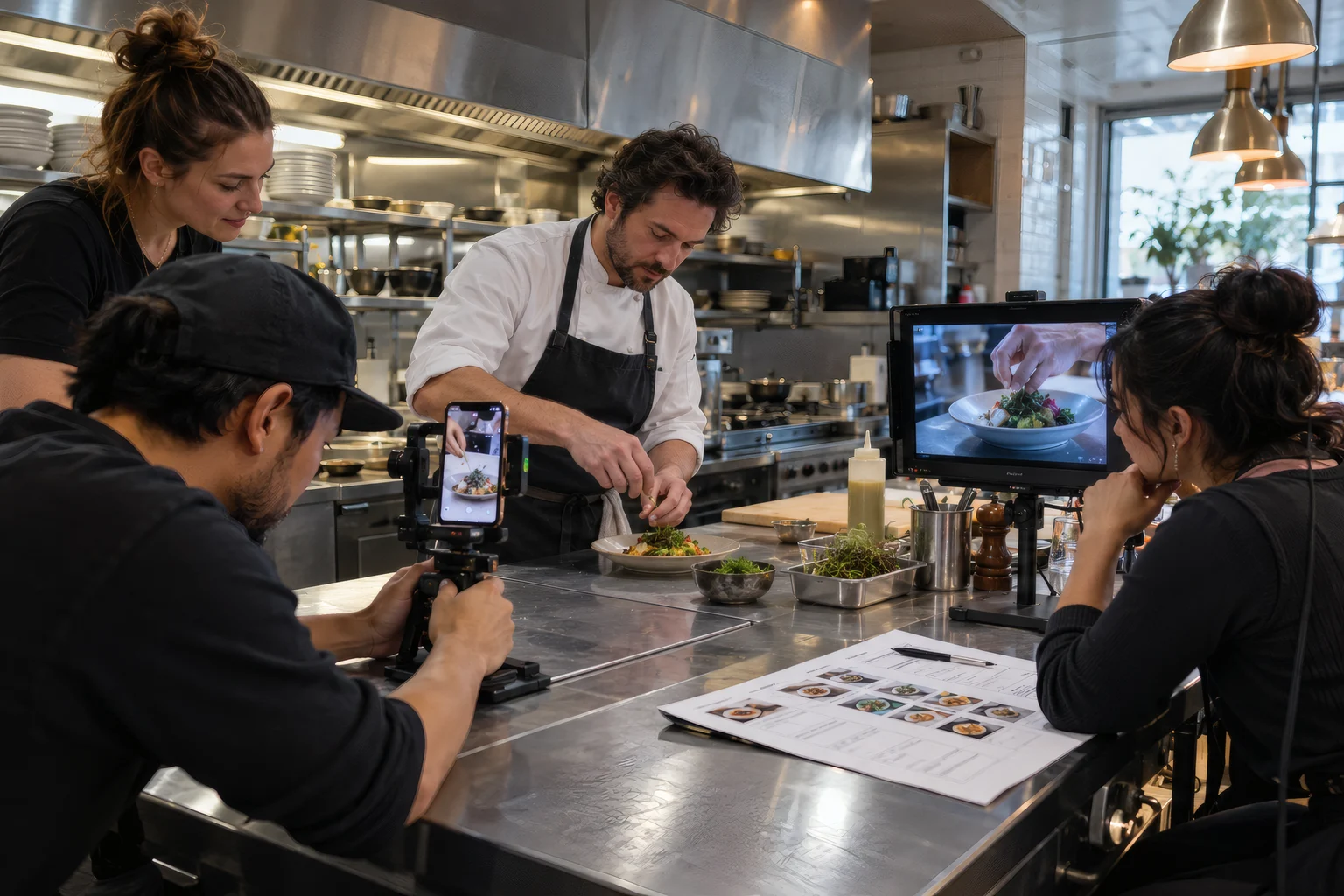
Illustrative restaurant story
Meet the hands behind the plate.
Introduce
Demonstrate
Invite
Content with more than one job.
A useful publishing mix can teach, show a process, answer a customer question or explain an offer. It is not a calendar filled with interchangeable promotions.
01
The opening
Show a specific moment that makes the subject clear.
02
The useful detail
Explain the ingredient, process, service or decision.
03
The invitation
Send the person to the relevant menu, article, enquiry or offer.
Understand
Collect expertise, approved facts, recurring customer questions and material worth showing.
Make
Plan shoots, short films, carousels, stills, copy and long-form articles for their actual use.
Approve
Check claims, rights, tone, captions and accessibility. Give a named person responsibility for publication.
Publish & respond
Agree scheduling, community coverage and the path to related useful information.
Instagram, Facebook & short-form
Reels, Stories, carousels and stills need purposeful covers, captions and an understandable opening. We plan each format and the approval calendar rather than rely on a fixed aesthetic.
LinkedIn & professional voices
Company updates, specialist perspectives, events and useful case-led posts should reflect the professional context. A founder’s voice needs real expertise behind it.
YouTube & longer stories
Titles, thumbnails, descriptions and chapters should help people judge relevance. Repurpose a longer film where a shorter extract has a useful independent purpose. Remember that a proposed film is not a completed portfolio result.
The brand should remain itself everywhere.
The applications change with the business. We design a system people can recognise and the owner can maintain.
Professional expertise
Build trust through clear service descriptions, real specialist knowledge and useful answers before an enquiry.
Hospitality & experience
Connect place, atmosphere, practical information and a useful booking or enquiry destination.
Makers & retail
Explain process, material and use. Human knowledge and product truth should lead the content rather than generic generated slogans.
Search & discoverability
Help people find the useful answer.
Content, structure and technical foundations work together. The visible page needs to earn the visit after it is discovered.
Start with a real question
Group the audience’s questions before choosing the page structure. Make the answer useful before adding a call to action.
Original AI-created process illustration; not a photograph of a completed client commission.
Illustrative organic search preview
example practice / residential design
Residential design: process, project fit and first steps
A clear service page explains who the work is for, what happens and how to begin.
01
Question
What does a potential customer need to know?
02
Answer
A helpful page with relevant evidence and a clear purpose.
03
Connection
Supporting articles and internal links that deepen understanding.
Titles and snippets are proposed examples. Search engines may display different text. Rankings or inclusion in an AI answer cannot be guaranteed.
Research & on-page
Map intent and missing topics. Improve purpose, titles, headings, copy, image descriptions and internal links.
Technical foundations
Review indexability, canonical signals, redirects, sitemap, structured data, mobile behaviour and performance issues.
Local & editorial discovery
Keep business and location information accurate. Build a sustainable publication plan with original expertise, sources and review dates.
Measurement
Review relevant queries, qualified visits, indexing health and useful actions. Followers and keyword counts alone are not the outcome.
Let’s shape the right service scope.
Tell us whether the gap is identity, publishing consistency, search visibility or the connection between them.