AI & hybrid production

AI possibilities.
Human direction.

Concept development, imagined worlds and hybrid films—with continuity, product truth and human review throughout.

Across industries. Shaped around your business.

AI & hybrid production service: Concept development, imagined worlds and hybrid films—with continuity, product truth and human review throughout.

The scope

What we can
make together.

Choose the support the project needs. Deliverables and review stages are defined before work starts.

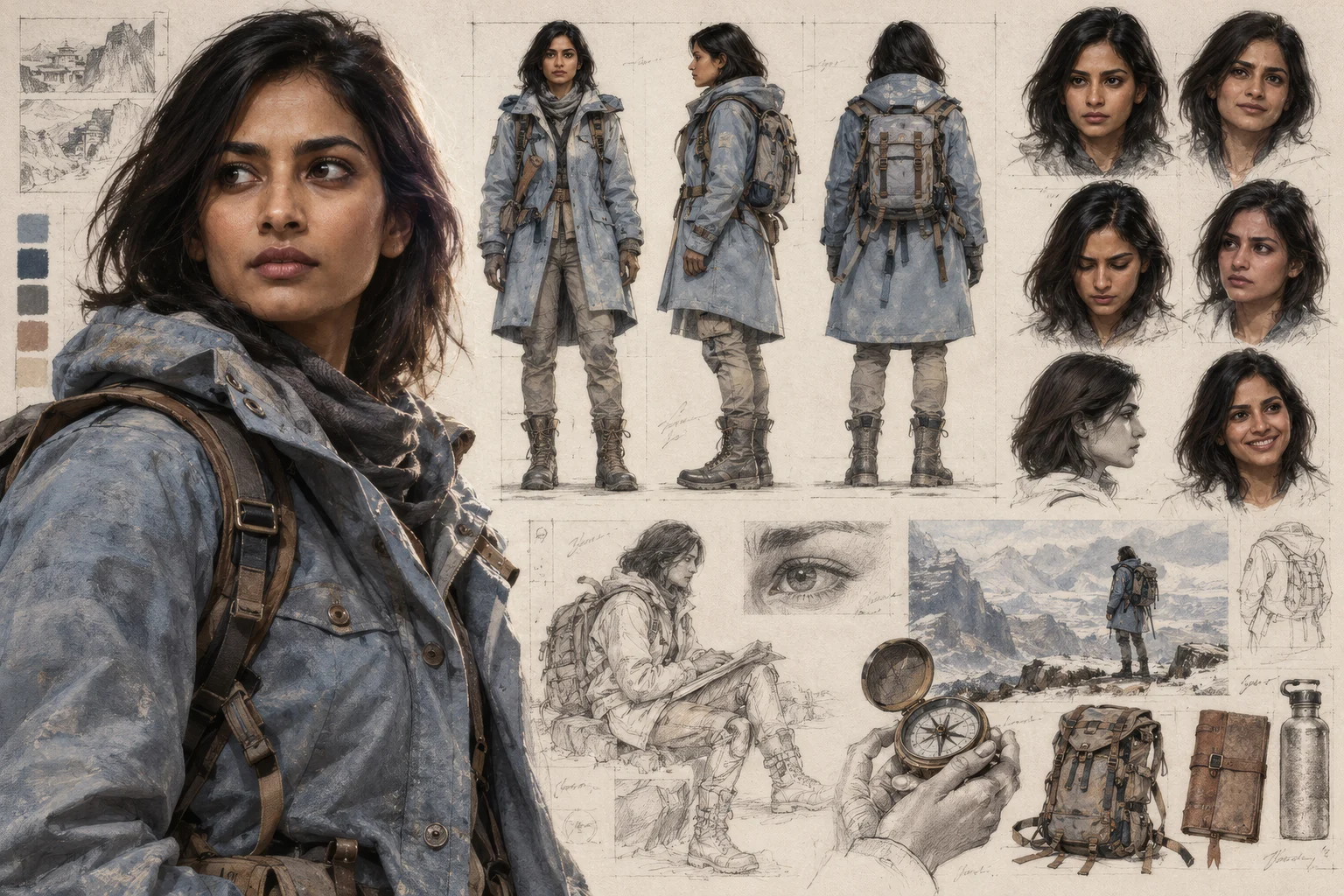
Original character reference sheet with portraits, turnarounds and wardrobe for a coastal explorer
Character and wardrobe development before the sequence · Illustrative study
  • Concept development

    Turn a brief into visual treatments, storyboards, and a defined creative approach.

  • AI & hybrid development

    Develop characters, settings, product worlds, and shots around an agreed visual direction.

  • Continuity & editorial

    Bring generated shots together through selection, pacing, compositing, and continuity work.

  • Campaign adaptations

    Create alternate hooks, formats, and edits for the channels your campaign needs.

Illustrative film crew capturing an Indian musician with camera and sound equipment
01

Live production

Real people. Exact detail.

Interviews, performance, locations and products captured on camera.

Starts with Script, access, talent and a shot plan.

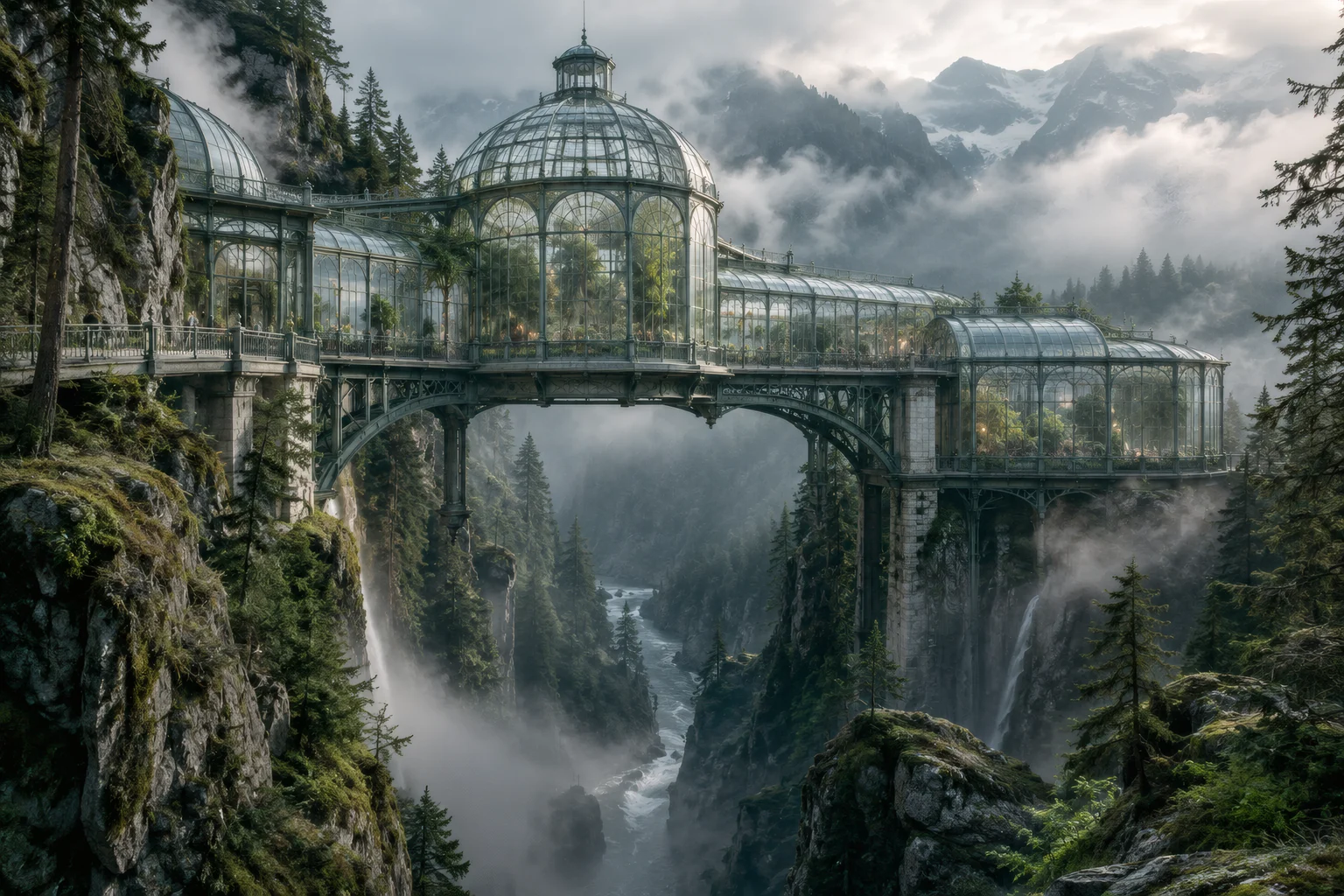
Original imagined botanical conservatory suspended above a misty mountain valley
02

AI production

Worlds beyond the location.

Generated environments and visual concepts shaped through direction and selection.

Starts with References, continuity rules and review frames.

Illustrative hybrid process: green-screen capture and a designed environment
03

Hybrid production

The right parts of both.

Live people or product plates combined with generated or designed environments.

Starts with Capture plan, matching light and compositing checks.

Script / Boards / Scene / Finish

Follow one idea.
See every decision.

An original coastal-observatory concept, from a written moment to a resolved visual direction.

Coastal observatory / Original concept

Start with a feeling.

“A traveller reaches the edge of the coast. A stone aperture opens to the sea. A hand meets the weathered surface. The place reveals its scale.”
Story
Discovery, place and a quiet moment of recognition.
Continuity
One explorer, a silver-blue coat, weathered basalt and cool coastal light.
Hybrid decision
Capture a real performance when exact expression or movement matters; develop the environment around the agreed plates.
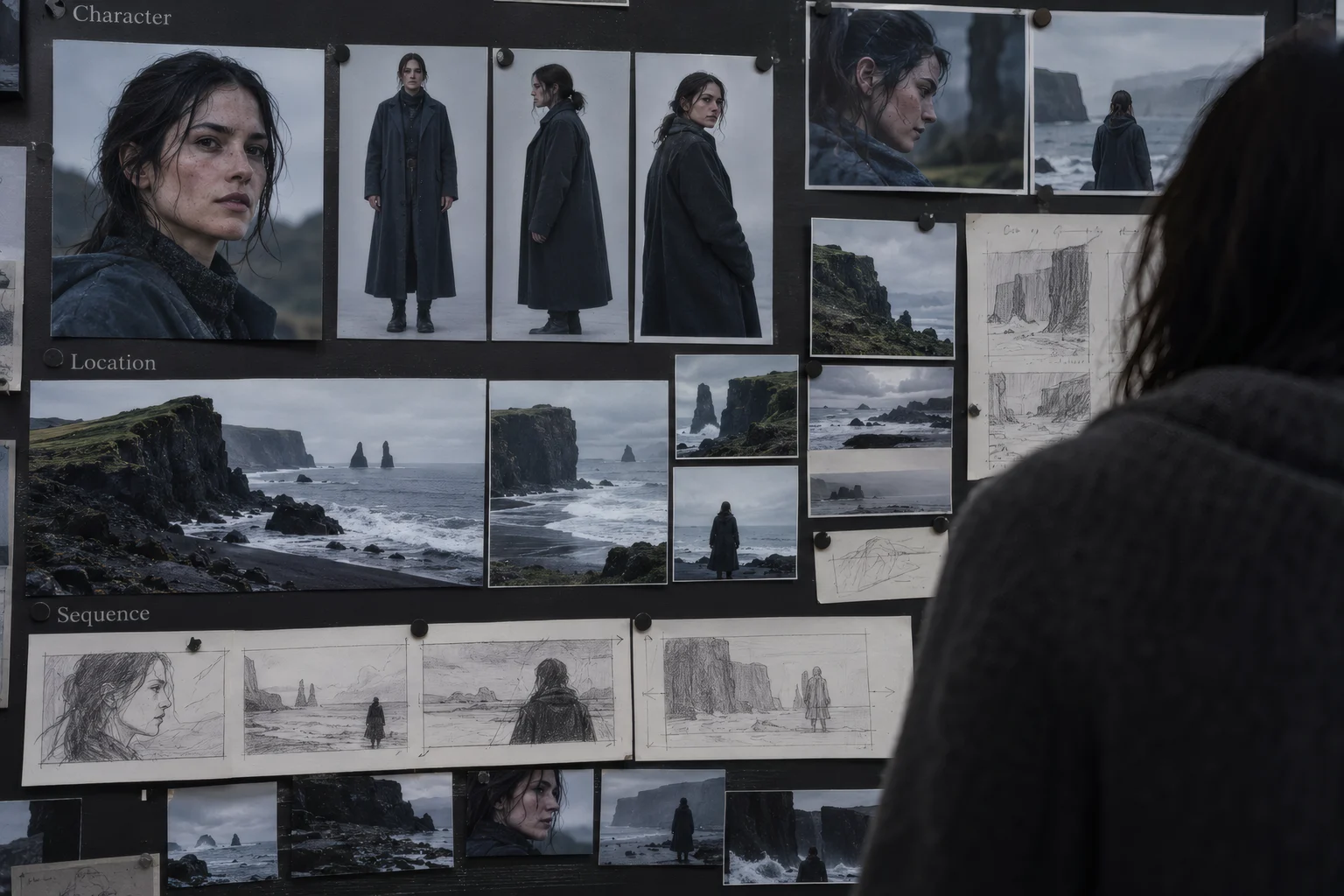
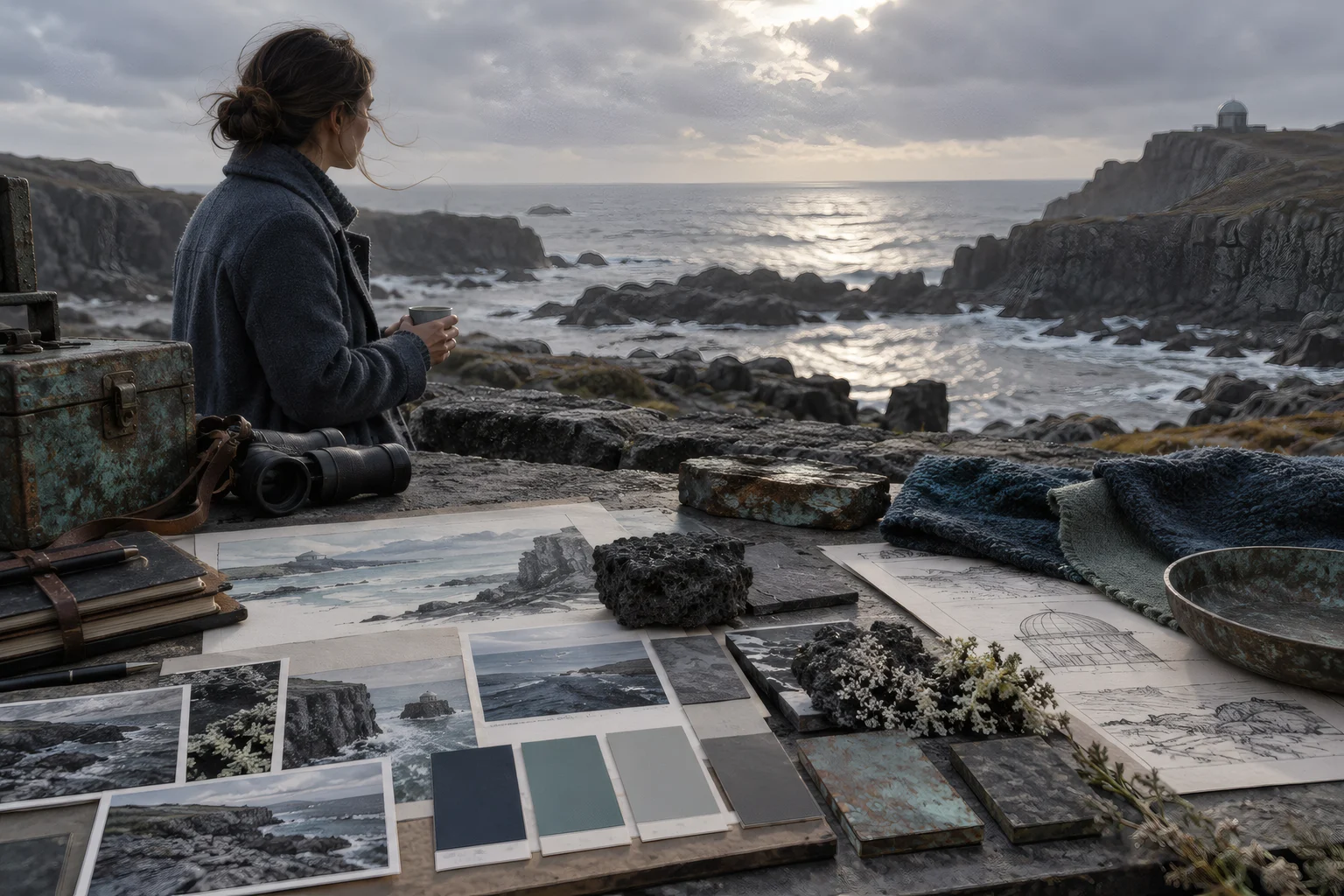
Original mood board of coastal stone, light, materials, wardrobe and colour references
01 / Inspiration, mood & location
Original character reference sheet with portraits, turnarounds and wardrobe for a coastal explorer
02 / Character & wardrobe

Define the face, profile, silhouette, costume and expressions before developing shots.

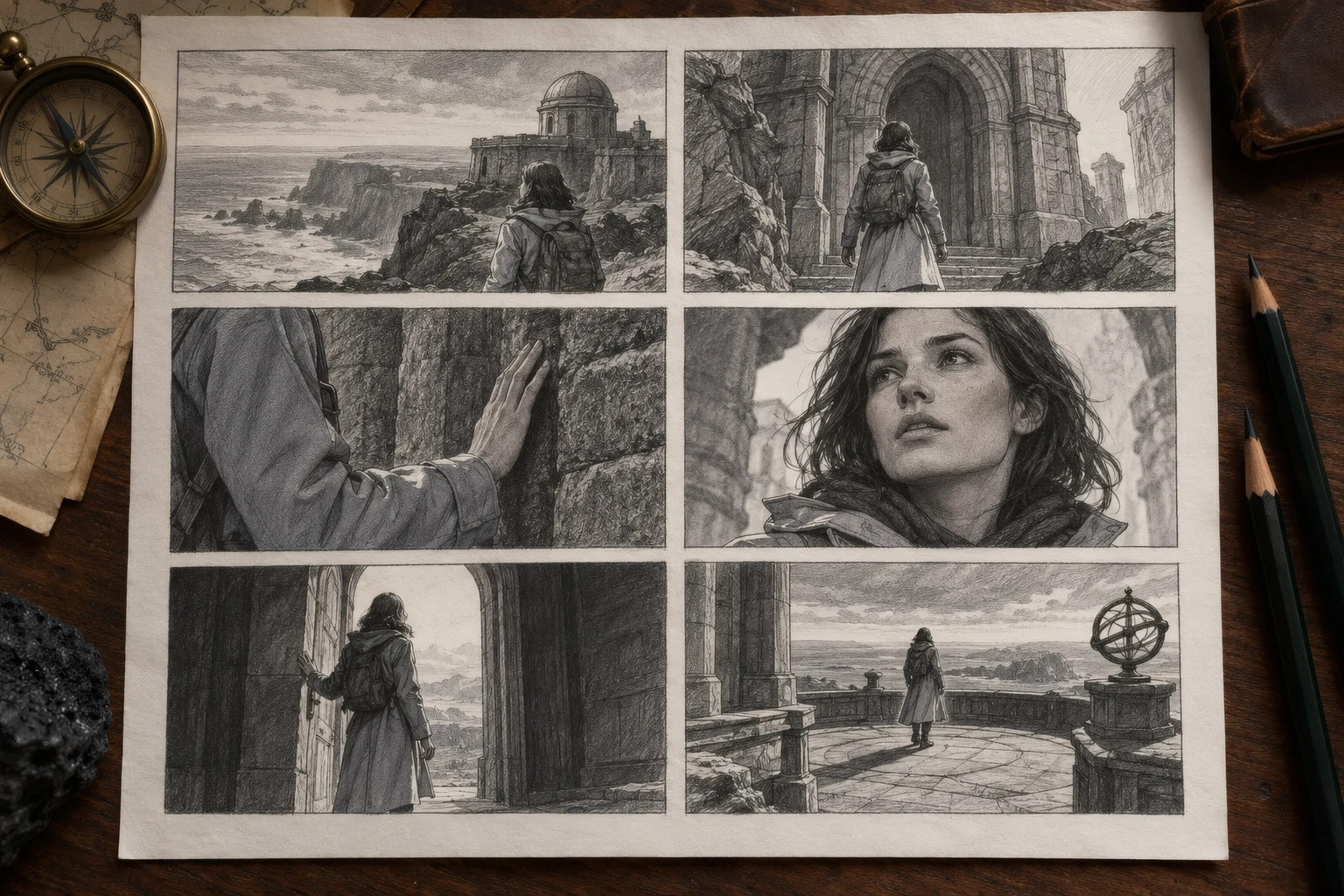
Original six-panel pencil storyboard showing an explorer approaching a coastal observatory
03 / Drawn storyboard

Connect the establishing view, approach, hand detail and final architectural reveal.

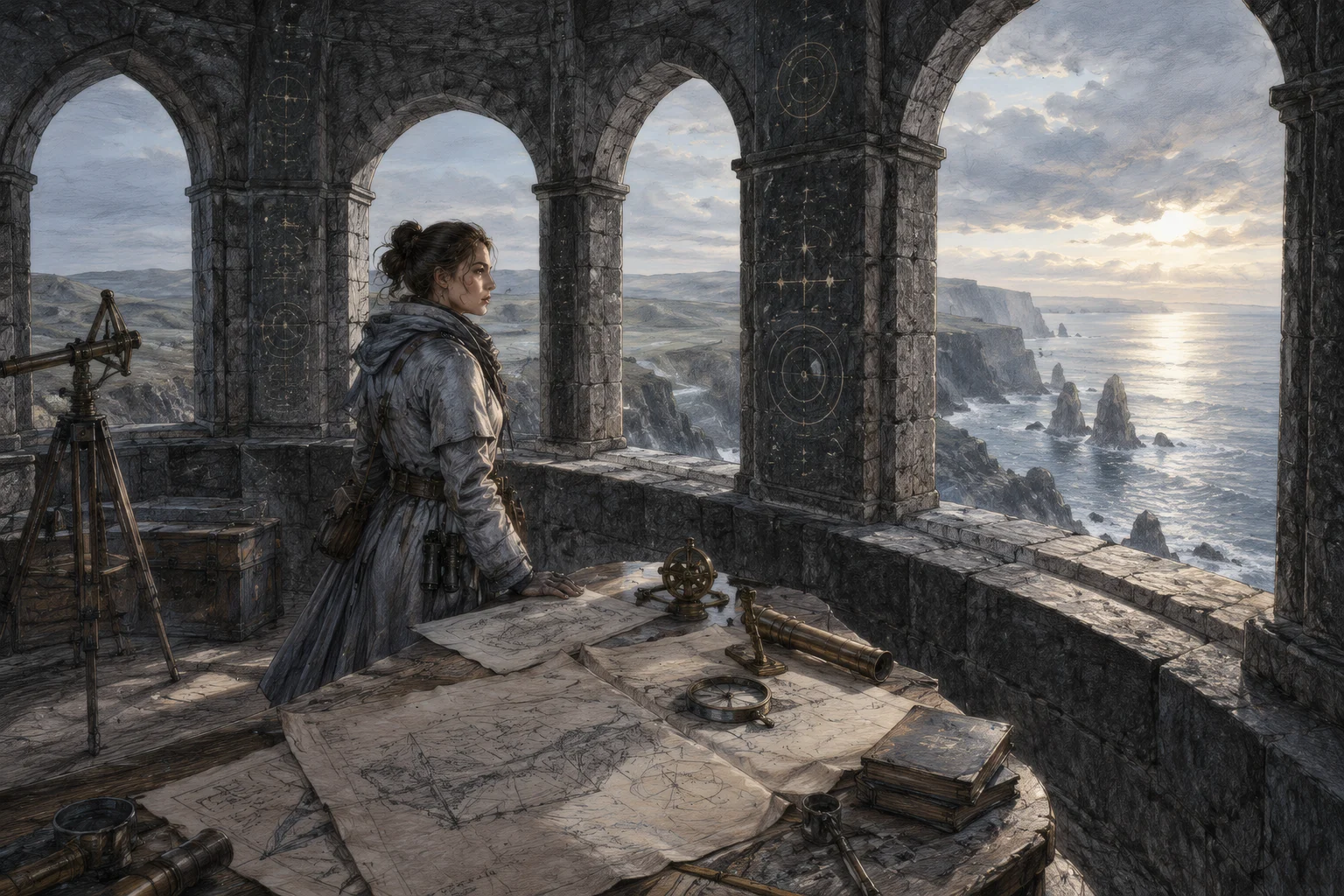
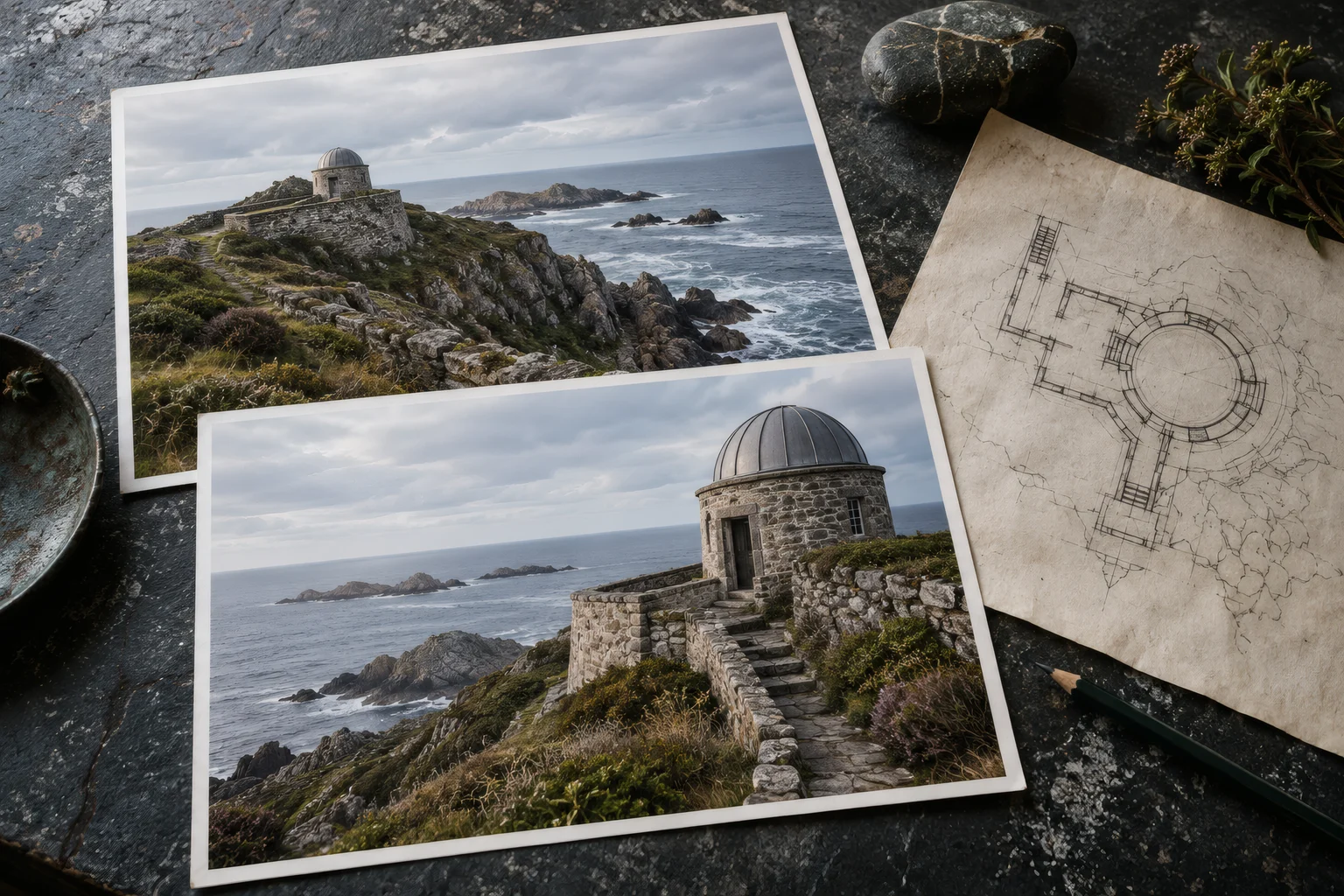
Original pencil composition drawing of an explorer within coastal stone architecture
04 / Composition

Resolve the relationship between the explorer, architecture, camera and coastline.

VFX development

Structure. Light. Final frame.

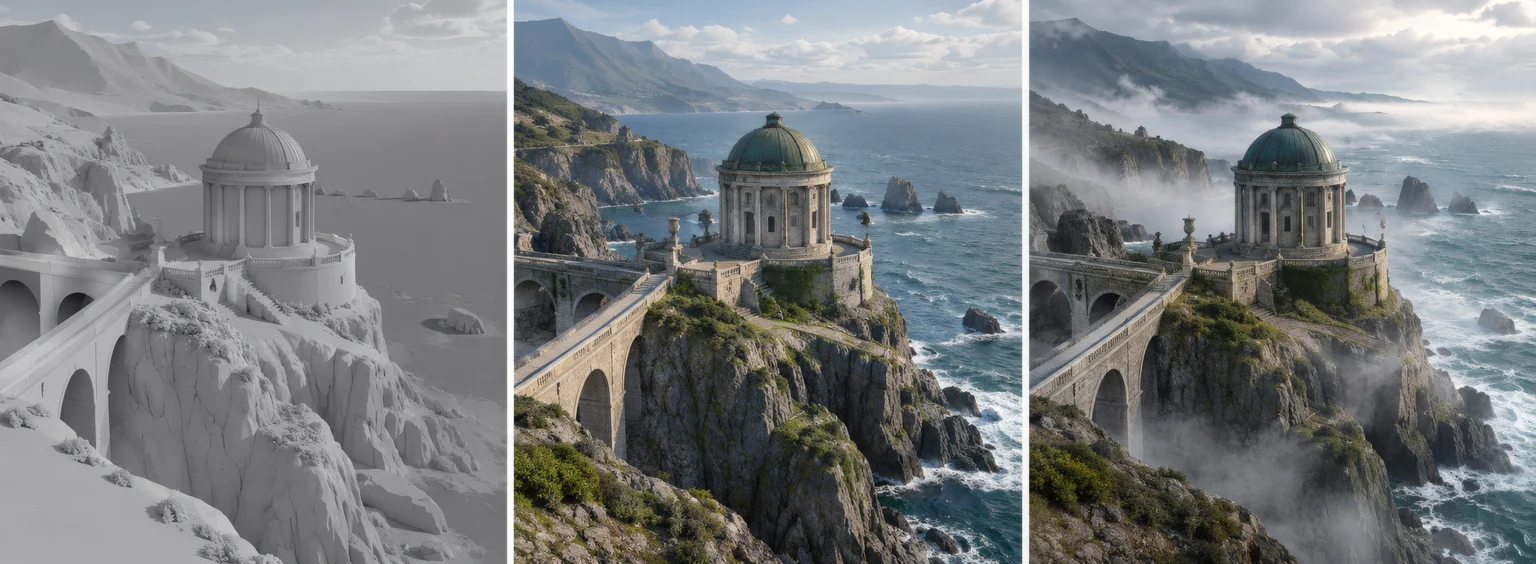
Compare how the scene changes as detail and atmosphere are introduced.

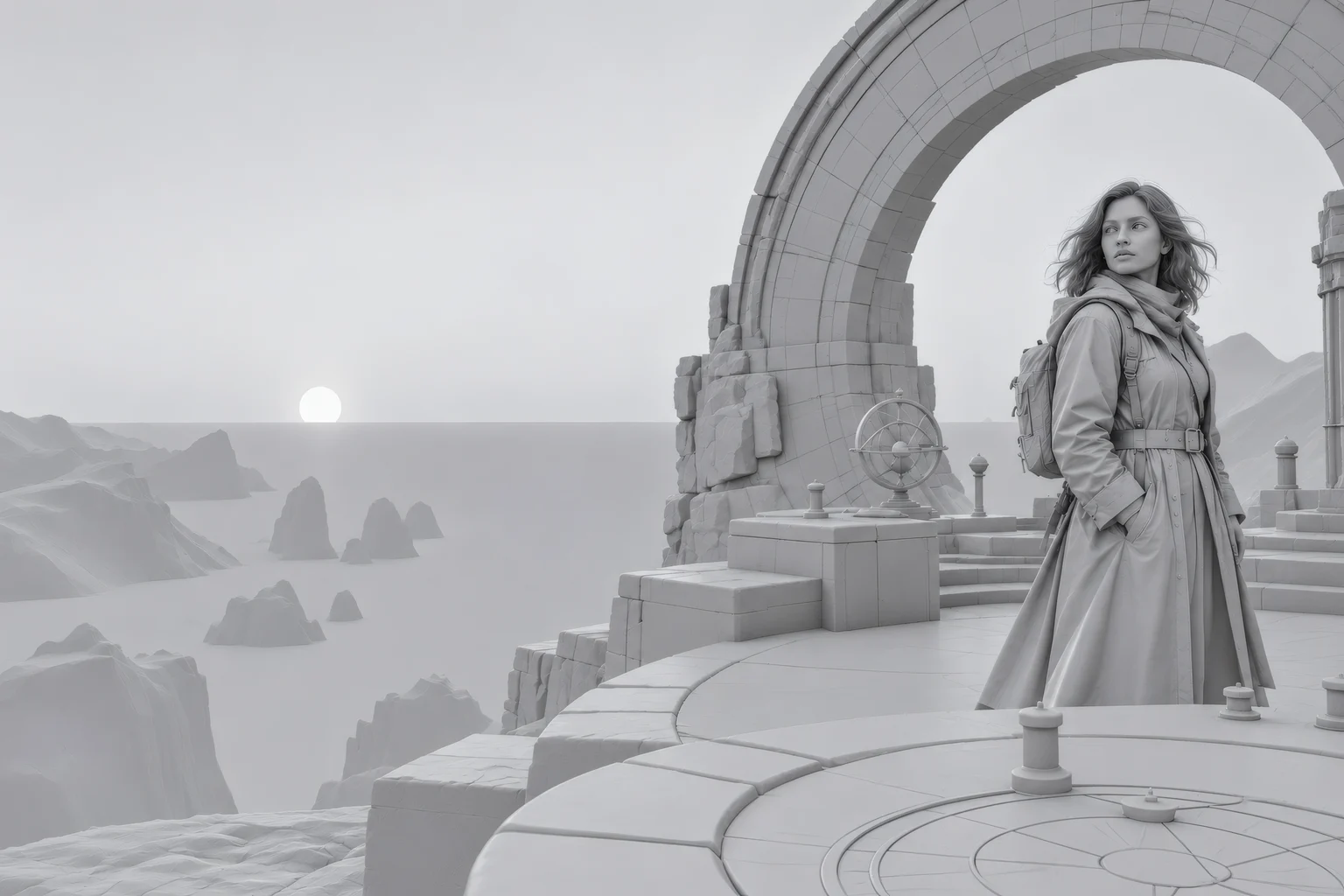
Gray scene. Establish camera, scale and geometry. Neutral forms reveal the structure.

Lighting pass. Shape depth through key light, sky fill, reflections and shadows.

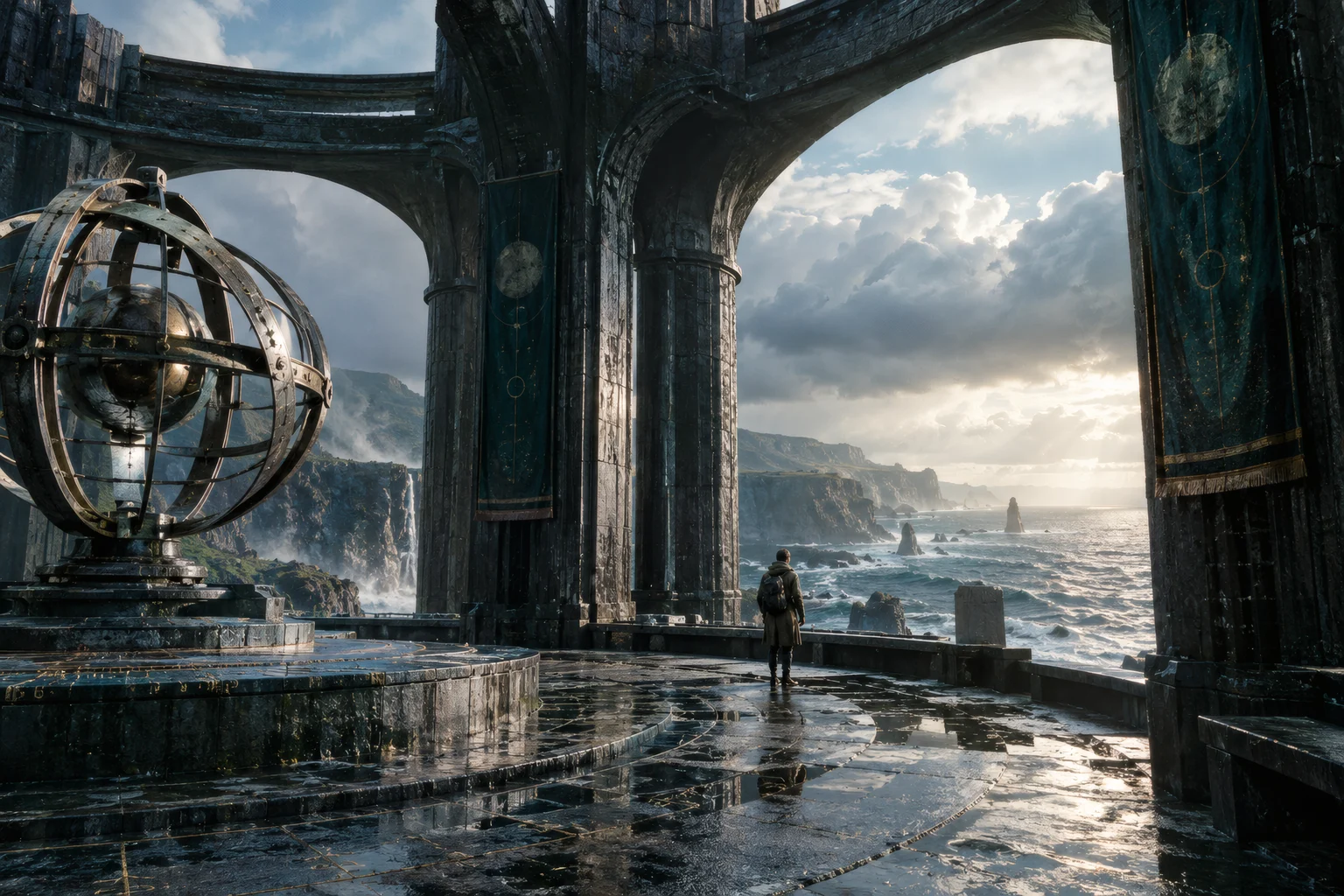
Final frame. Resolve materials, natural skin, atmosphere, colour and the final scene.
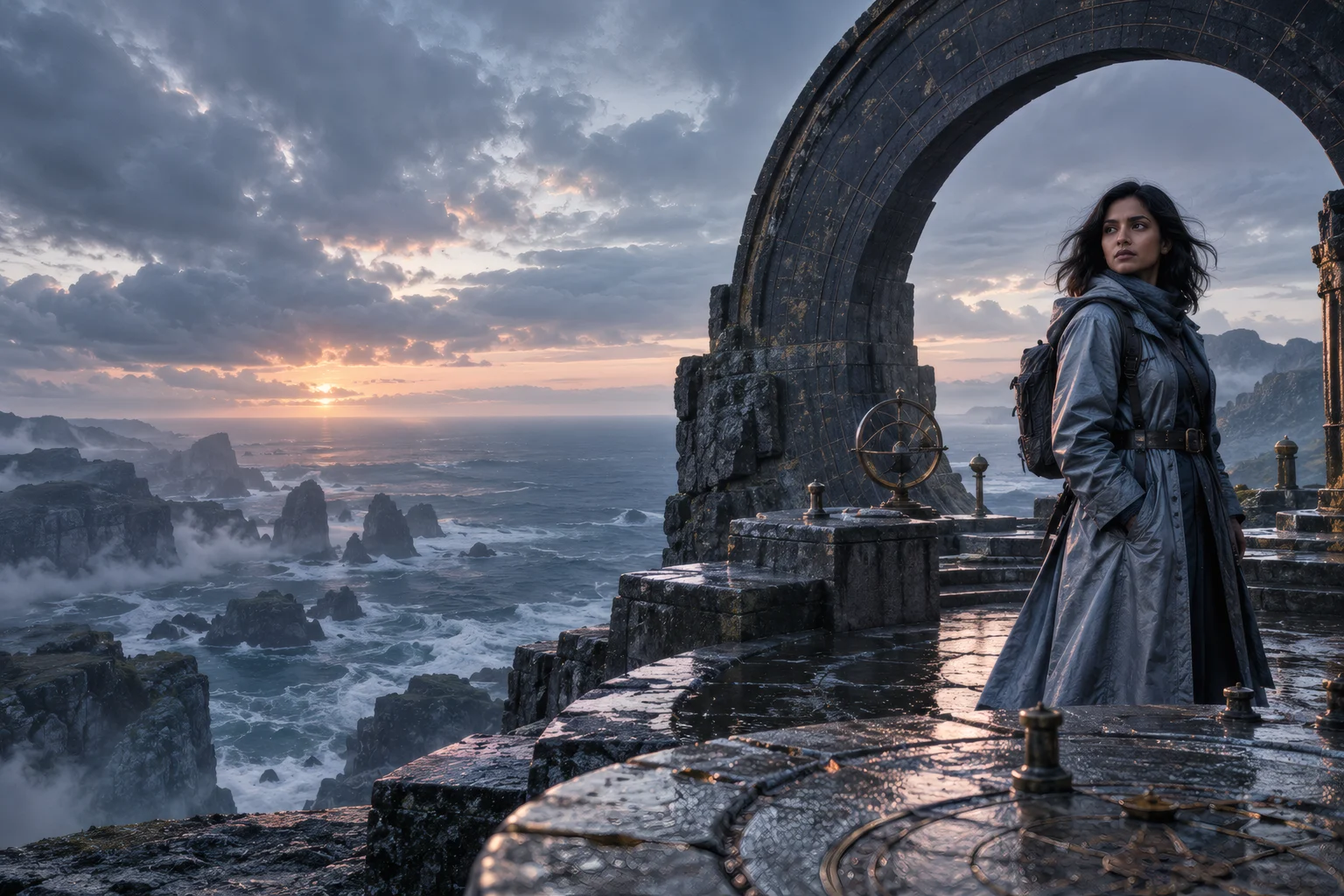
Original finished visual concept of an explorer in silver-blue clothing overlooking the coast
AI-created neutral clay scene-development illustration with an explorer, circular stone arch and coast
Gray sceneFinal frame

Drag the slider or use the arrow keys to compare the same composition.

AI-created planning illustrations. These depict development stages; they are not passes extracted from a completed 3D project.
Illustrative VFX development

Structure. Material.
Atmosphere.

The same scene moves from neutral clay geometry through material and lighting decisions to a final visual direction.

Identical coastal observatory scene in grey clay, lighting development and final visual direction
Original AI-created concept breakdown. These are planning illustrations, not extracted render passes from a completed 3D production.

01

Grey scene

Check camera, scale, silhouette and scene structure.

02

Material & light

Resolve surfaces, reflections, shadow and visual hierarchy.

03

Final direction

Review atmosphere, continuity and the details that must remain exact.

Delivery plan

Define the world. Agree the details.

The proposal sets the exact deliverables, responsibilities, formats, review rounds and fees.

Bring to the brief

  • Visual references and brand or product source material
  • Details that must remain exact across the sequence
  • Intended use, audience and platform requirements

Agree before production

  • Visual treatment, look development and shot direction
  • Product and character accuracy checkpoints
  • Selection, continuity, edit, sound and final versions

Before the brief

A few practical
answers.

Yes. Start with one deliverable or connect the disciplines the project needs.

Complexity, starting material, production requirements, versions and review stages shape the proposal. Share a target date and budget if you have them.

We define the review contact, feedback stages, revision rounds and final delivery list before the work begins.

Use AI where it earns its place.

An impossible location, an early concept or a variation may benefit from generation. Exact identity, factual detail and commercial product accuracy still set the boundaries.

Resolve structure before atmosphere — original illustrative visual

Resolve structure before atmosphere

Use a simplified scene to discuss composition, camera and scale before selecting a detailed look.

Keep a visual rulebook — original illustrative visual

Keep a visual rulebook

The location, repeated features and light should stay connected across selected frames.

Concept films & world development

Explore environments, atmosphere and visual treatments before committing to a direction. Choose references, camera language and a clear narrative rather than collecting disconnected attractive frames.

Character & continuity

Define appearance, wardrobe, scale, lighting and the details that must persist. Review a character sheet and key frames together before attempting the full sequence.

Product worlds & hybrid plates

Capture or use approved exact product assets where precision is essential. Build the environment around them and review contact, reflections, shadows and motion in the composite.

Versions & campaign assets

Plan different openings, crops and shot selections around a stable message. Every output still needs review for anatomy, lettering, product geometry and consistency.

A sequence needs a shared visual rulebook.

Script, references, character, location and key frames should inform one another. The first compelling image is a starting point, not a finished production.

Original imagined environment visual study
Original AI visual-development illustration. It describes a process, not extracted passes from a completed production.
  1. Agree the world

    Define story, visual references, exact details and rights.

  2. Establish the anchors

    Review character, product, location and representative frames.

  3. Develop the sequence

    Generate, select, refine or combine shots with human direction.

  4. Finish the film

    Edit for rhythm, repair inconsistencies, design sound and review every required version.

Know what must remain exact.

The production method is a creative and commercial choice.

Can AI preserve every product detail automatically?

No. Generative output can alter geometry, markings, anatomy and continuity. Exact commercial product work may require real plates, conventional 3D, compositing or correction.

Is an AI film always quicker or cheaper?

No. Complexity, continuity, revisions, rights, resolution and finishing all affect the work. We scope the sequence and acceptance criteria before choosing the method.

What do we approve?

The brief, reference direction, key frames, sequence and finished versions. Review stages identify which decisions are open and which approved details must remain stable.

Make it count

What are you
working on?

Bring the idea, the ambition or the problem. We’ll help shape the next step.

Image detail