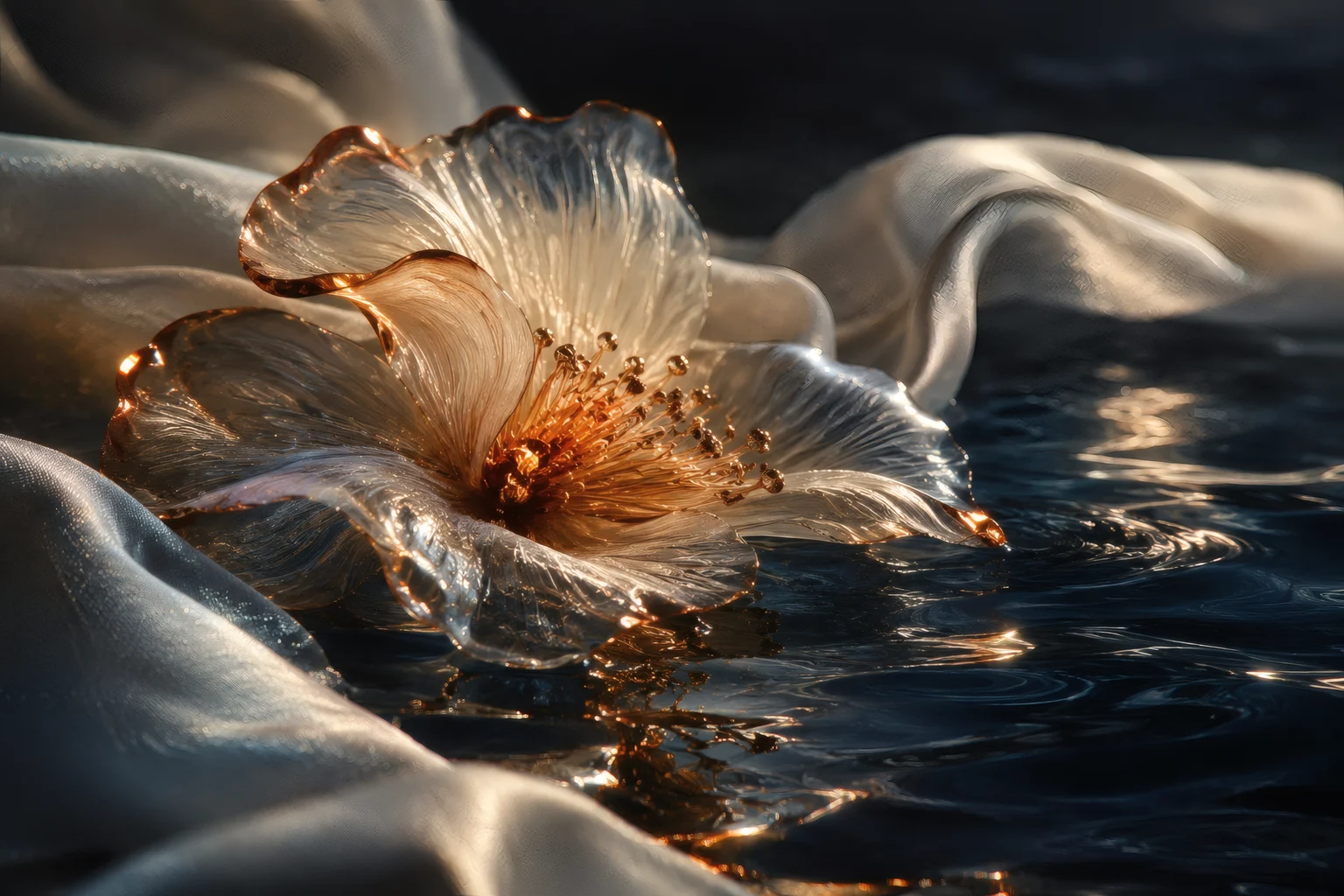
Original translucent glass flower concept on dark reflective water beside ivory fabric in neutral studio light

Self-initiated AI visual study

Bloom.
Light, material and form.

An original still-image exploration of translucent petals, reflective water and tactile fabric. A material study, not a commissioned film.

The visual idea

Three materials.
One composition.

Glass, silk and water play different roles. Their contrast gives the image its shape without a busy palette.

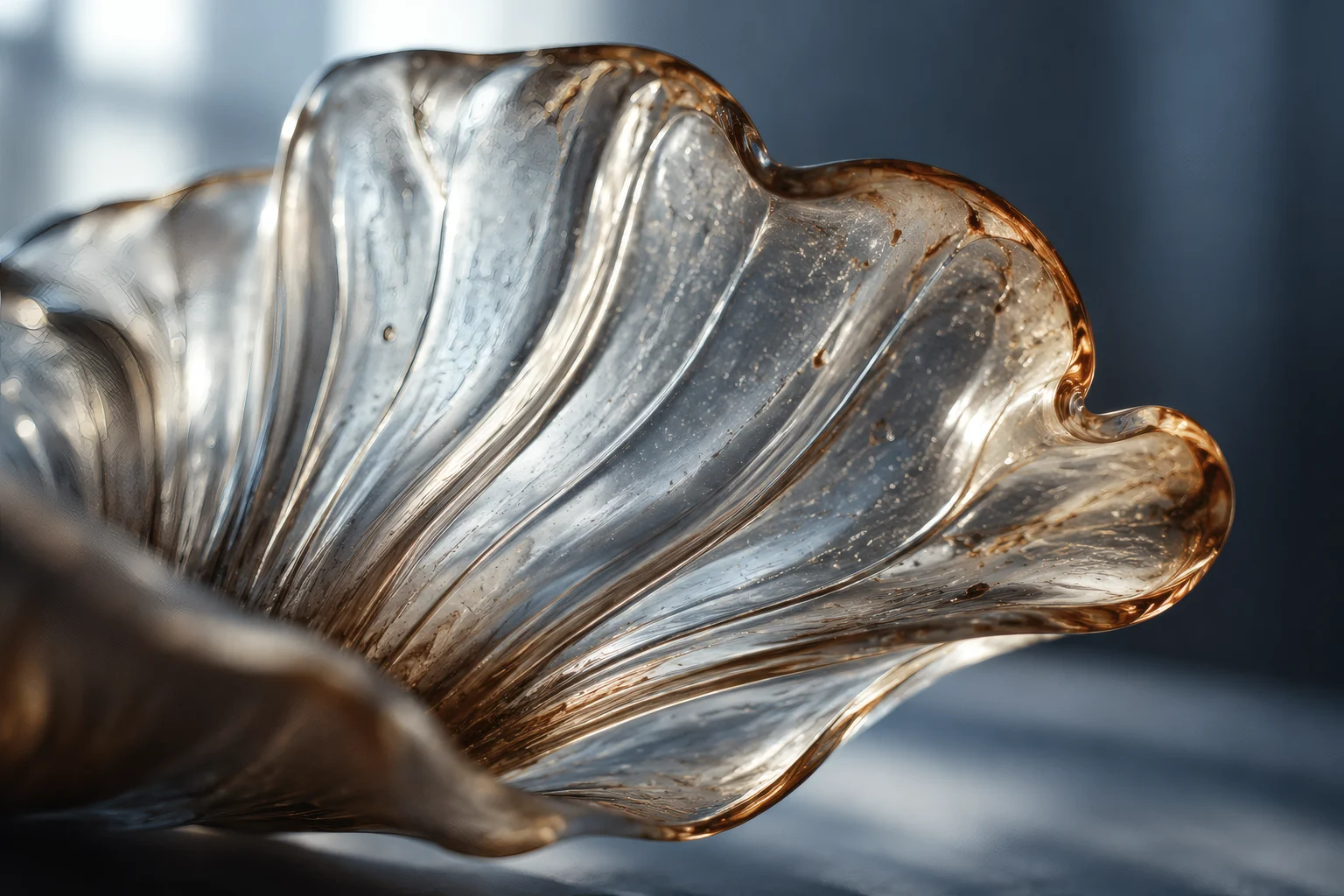
Cool pearl light reveals ridges in a translucent smoke-amber glass petal.

Glass

A translucent edge catches the pearl key light and reveals the petal structure.

Silver-neutral light across an ivory silk fold and visible weave.

Silk

A soft weave introduces movement and a quieter surface beside the glass.

Silver highlights trace ripples on dark slate-blue water.

Water

A dark reflection grounds the object and doubles its silhouette.

Scene development

From structure
to atmosphere.

The sketch and neutral clay illustration make composition easier to understand before material and light enter the frame.

Graphite composition sketch of a glass blossom, silk and water.

Composition sketch

Resolve the silhouette, balance and placement.

AI-created neutral-gray blockout illustration of the blossom scene.

Clay-style illustration

Show volume and camera relationships without surface detail.

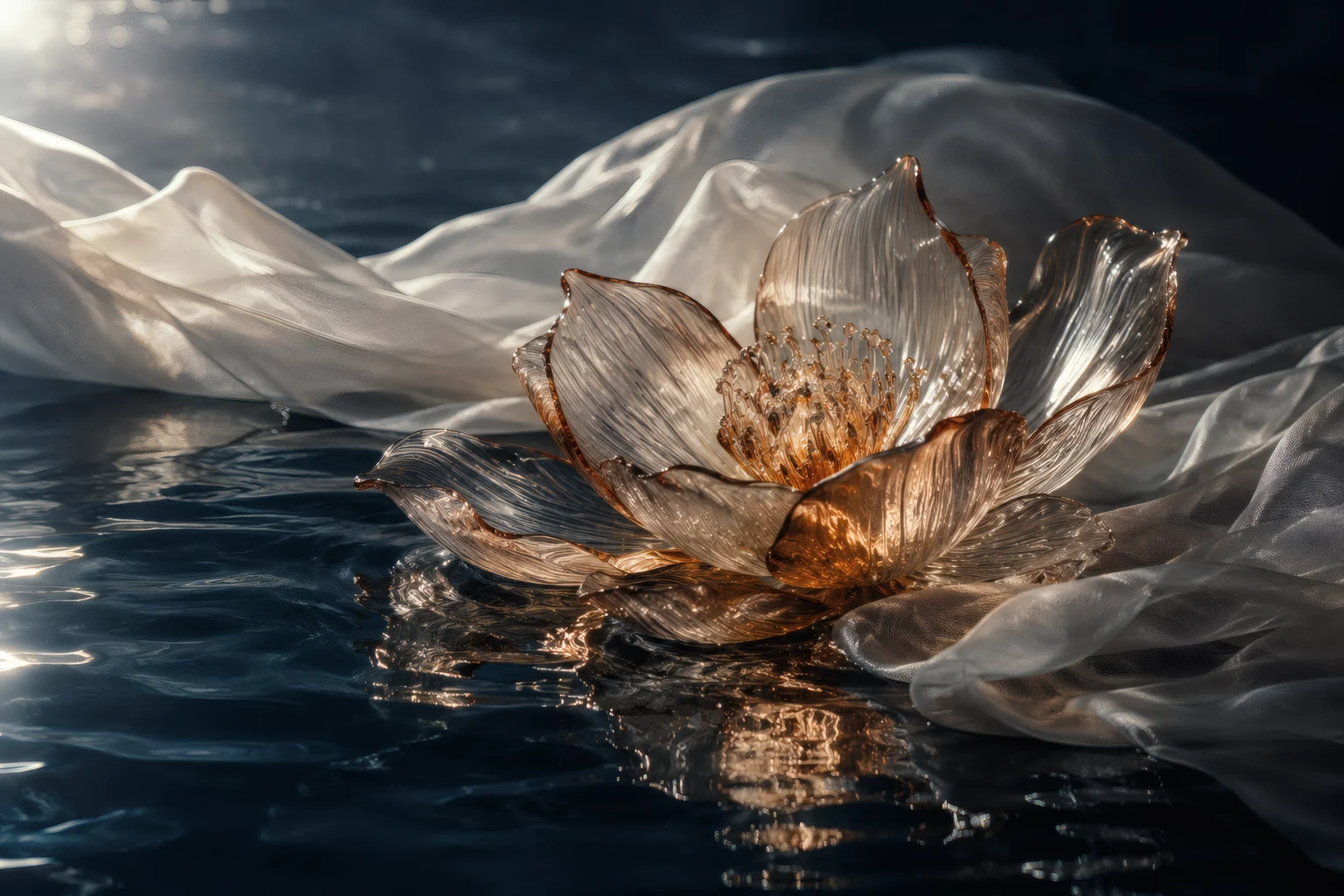
Original macro study of translucent glass petals, ivory silk and dark reflective water

Finished material study

Introduce translucency, tactile fabric and a restrained reflection.

AI-created explanatory development views. These are not passes extracted from a completed 3D production.

Light & composition

Beauty in the
smallest detail.

Original translucent glass flower concept on dark reflective water beside ivory fabric in neutral studio light
Original Bloom still-image concept

The edge carries the light.

A cool key defines the glass. Smoke-amber edges add a small warm contrast, while dark water leaves the form room to breathe.

For a future sequence, an establishing view could reveal the silhouette, a closer shot could study the texture, and the final composition could hold for a title.
Self-initiated AI-generated still-image study. The development illustrations explain a possible process; no commissioned film or real production pass is claimed.

A visual explanation

The light has
a specific job.

Different surfaces and subjects need different decisions. The diagram makes those relationships discussable before capture.

Follow the highlight — original illustrative visual

Follow the highlight

Glass becomes readable through its edge, reflection and the space visible through it.

Look at the contact — original illustrative visual

Look at the contact

Water, silk and glass need believable contact, surface tension and a shared direction of light.

Surface & form

Compare a soft source with a harder edge and watch how the surface changes. The light should explain the material.

01

Observe

Identify the important surface, gesture or marking.

02

Control

Move the source, flags or camera to keep that detail readable.

03

Compare

Review a reference and the selected final frame together.

Schematic lighting concept, not a measured plan from an actual completed shoot.

Make it count

What are you
working on?

Bring the idea, the ambition or the problem. We’ll help shape the next step.

Image detail